Co-located with UbiComp 2026 · Kaggle · Two Tracks

CUHK-X Multimodal
Human Activity Challenge

An international competition spanning lightweight efficient models and frontier multimodal LLMs on depth, IMU, mmWave radar, and skeleton modalities — built on the CUHK-X benchmark for HAR, HAU, and HARn tasks.

2
Parallel Tracks
6
Modalities
40
Action Classes
$20K
Total Prize Pool

Competition Overview

The CUHK-X Multimodal Human Activity Challenge is the first large-scale international competition that excludes RGB data entirely — models learn human dynamics information from depth, IMU, mmWave radar, and skeleton modalities. This privacy-preserving design mirrors the deployment reality of healthcare, smart home, and elderly-care systems, where visual privacy must be preserved at every stage of training, validation, and inference.

Hosted by the AIoT Lab at The Chinese University of Hong Kong on Kaggle across two parallel tracks, with finals held alongside UbiComp 2026 in Shanghai. The Small Model Track targets efficient, edge-deployable HAR; the Large Model Track pushes multimodal LLMs on VQA covering action understanding and reasoning. Total prize pool: USD $20,000.

Host
CUHK · AIoT Lab
Platform
Kaggle — two parallel competitions
Duration
June 20 – September 15, 2026
Finals Venue
UbiComp 2026 · Shanghai · Oct 11, 2026
Two Tracks
Small Model (HAR) · Large Model (VQA)
Permitted Modalities
Depth · IMU · mmWave · Skeleton · Thermal · Infrared
Total Prize Pool
USD $20,000
Finals Format
On-site deployment · technical report · awards

News

Jun 20, 2026
LaunchThe CUHK-X Multimodal Human Activity Challenge has officially launched — both the Small Model and Large Model tracks are now open on Kaggle for registration and submissions.
May 23, 2026
WebsiteOfficial CUHK-X Challenge website is now live, and the full CUHK-X dataset has been officially released to the public.
Apr 15, 2026
PaperCUHK-X paper has been accepted by MobiSys 2026 — camera-ready version submitted.
Mar 2026
DatasetCUHK-S (a subset of CUHK-X with 18 users, RGB excluded) released for community preview and feedback.
Nov 4, 2025
AwardCUHK-X received the Best Presentation Award at the ANAI Workshop @ MobiCom 2025.

Challenge Format

Two independent parallel tracks, each with its own Kaggle leaderboard, prize pool, and evaluation criteria.

Small Model Track

HAR · Lightweight

Efficient multimodal Human Activity Recognition

Targeted at resource-constrained edge deployment in smart home and healthcare scenarios — applications such as Alzheimer's monitoring, fall detection, and elderly care, where models must run on low-power devices with limited memory and compute.

Participants build lightweight multimodal models that fuse depth imagery, IMU streams, mmWave radar, and skeleton keypoints to classify 40 daily activities under strict cross-subject evaluation. Traditional architectures (CNN, RNN, Transformer) are encouraged; large pretrained foundation models are not permitted — placing the spotlight on architecture design, sensor fusion, and inference efficiency.

Task40-class HAR · Cross-Subject
Cross-Subject SplitTrain: user 1–9, 16–24 · Test: user 10–11, 25–26
Primary ModalitiesDepth, IMU, mmWave, Skeleton, IR, Thermal
Model ConstraintCNN / RNN / Transformer · model size ≤ 100 MB · no large pretrained backbones
Prize PoolUSD $10,000
Final Scoring Breakdown (for finalists)
Kaggle Private LB
20%
Final On-Site Private Test
30%
Reproducibility (Stage 2)
10%
Technical Report
20%
Presentation
10%
Model Efficiency
10%

Large Model Track

VQA · HAU & HARn

LVLMs on depth & non-RGB modalities

Pushes the frontier of Large Vision-Language Models on non-RGB modalities.

Participants tackle Human Action Understanding (HAU) and Human Action Reasoning (HARn) through privacy-preserving video Visual Question Answering. There is no parameter limit, encouraging exploration of prompt design, modality alignment, and fine-tuning at scale.

TaskVQA on privacy-preserving videos
Cross-Subject SplitTrain: user 1–9, 16–24 · Test: user 10–11, 25–26
Primary ModalitiesDepth, Thermal, IR
Model ConstraintNo parameter limit · LVLMs encouraged
Prize PoolUSD $10,000
Final Scoring Breakdown (for finalists)
Kaggle Private LB
20%
Final On-Site Private Test
30%
Reproducibility (Stage 2)
10%
Technical Report
20%
Presentation
10%
Model Efficiency
10%

Three-Stage Competition · Both Tracks

The CUHK-X Challenge runs across three stages: a 3-month Kaggle phase, a Zoom-based selection stage to verify reproducibility and prevent cheating, and the on-site finals at UbiComp 2026 in Shanghai. Top 15 teams per track on the Kaggle private leaderboard advance to selection; top 6 then advance to finals.
01

Kaggle Open Competition

Jun 20 – Sep 15, 2026 · 3 months
  • Submit prediction CSVs to Kaggle
  • Public leaderboard for reference; private leaderboard decides ranking
  • Certificate awards: Excellence (Top 15%), Distinction (Top 30%), Successful Participation
  • Top 15 teams per track advance to Selection Stage
02

Selection Stage · Zoom Verification

Sep 16 – Sep 30, 2026 · 2 weeks
  • Top 15 submit code + checkpoint + inference.sh via email/Drive
  • Zoom session: live inference on sample data (released at session start)
  • Sample data has seen + unseen subjects
  • Organizers reproduce Kaggle result offline to verify weights
  • Top 6 teams per track pass to UbiComp finals
03

UbiComp Finals UbiComp 2026

Oct 11, 2026 · Shanghai · 1 day
  • On-site inference on organizer's brand new private dataset (cross-subject)
  • Mandatory: 15-min technical report presentation + Q&A
  • Awards ceremony + USD $500 travel grant per attending finalist team
  • Remote participation via Zoom supported if travel is not possible

Awards

Each track carries an independent prize pool of USD $10,000. The following prizes apply independently to both the Small Model Track and the Large Model Track.

🥇
1st Place × 1
$6,000
Highest overall score
🥈
2nd Place × 1
$3,000
Second-ranked team
🥉
3rd Place × 1
$1,000
Third-ranked team
📄
Best Report Award
TBD
Selected by review committee
Most Popular Award
TBD
Community vote / most innovative
🎓
Best Faculty Advisor Award
TBD
Advisor of highest-scoring student team

$10,000 per track · $20,000 total across both tracks

Certificate Awards · Both Tracks

Beyond the prize-money tiers above, every participating team is recognized through a 5-tier certificate system (per track). Tiers are nested — each team receives only their highest-qualifying award.

Tier Award Eligibility
🏆 Outstanding Award UbiComp Finals Top 6
🎖️ Finalist Award Kaggle Private LB Top 15
🎗️ Excellence Award Kaggle Private LB Top 15% (excl. Top 15)
📜 Distinction Award Kaggle Private LB Top 30% (excl. above)
Successful Participation Award Teams with ≥ 1 valid submission

All certificates are issued electronically to the email address provided during team registration.

✈️ Travel Grants for UbiComp 2026 Finalists

Flat travel grant for every finalist team attending in person at UbiComp 2026 Shanghai

✈️
All Finalist Teams (Top 6 per track)
USD $500 / team

In-person attendance is strongly encouraged. Teams unable to travel may join remotely via Zoom — organizers will operate the projector and coordinate live Q&A on their behalf. Remote teams remain eligible for prizes and awards, but travel grants only apply to teams attending in person.

Leaderboard

Top 6 teams per track, auto-synced from Kaggle every day at 10:00 HKT.

Small Model Track
Large Model Track
Rank Team Score Last Submission
Loading…

Challenge Timeline

May 23
2026

Website Released

Official CUHK-X Challenge website goes live with full timeline, track details, and dataset overview.

Jun 20
2026

Competition Launch

Both Kaggle competitions open for registration and submissions. Dataset publicly released. Promotion channels go live simultaneously.

Sep 15
2026

Kaggle Leaderboard Freeze

Public submissions close. Top 15 teams per track on the Kaggle private leaderboard are notified and required to upload code + checkpoint within 48 hours.

Sep 16–30
2026

Selection Stage · Zoom Verification

Top 15 teams attend a Zoom verification session where they run live inference on freshly released sample data. Organizers also reproduce Kaggle results offline using submitted code. Teams with accuracy gap > 10% from their private LB score are disqualified.

Oct 1
2026

Final Top 6 Announced

Top 6 teams per track passing verification are officially invited to UbiComp 2026 finals. Final Technical Report due by this date.

Oct 11
2026

UbiComp 2026 Finals · Shanghai

Finalists run inference on a brand-new private dataset (cross-subject, never released). 15-min technical report presentation + Q&A. Awards ceremony same day. Teams unable to travel may participate via Zoom.

Registration

Step 1. Register your team on this official website using the form below — required to be eligible for prizes, announcements, and finals invitations. Step 2. Join the competition on Kaggle and create your team there with the same team name. ⚠ Your Kaggle team name must exactly match the team name registered here — otherwise your certificate and shortlist notification cannot reach you.

Step 1 — Register Your Team

Submit your team info so we can keep you in the loop on competition news, finals logistics, prize coordination, and last-minute announcements. Takes about 2 minutes to fill out.

Fields collected
  • Team Name
  • Contact Email
  • Affiliation
  • Country / Region
  • Track(s) of interest
  • Team Members (1–3)
  • Faculty Advisor

Step 2 — Join on Kaggle (use the same team name)

Small Model Track

Lightweight HAR

Multimodal action recognition under resource constraints. Build efficient CNN / RNN / Transformer architectures — no large pretrained backbones permitted.

Register on Kaggle →
Large Model Track

VQA · HAU & HARn

Vision-language models on depth and non-RGB modalities. Tackle 6,160 VQA questions across five reasoning types — no parameter limit.

Register on Kaggle →

Registration Steps

01

Create Kaggle Account

Sign up at kaggle.com and verify your email address.

02

Join Competition

Accept the competition rules on one or both Kaggle pages.

03

Form Your Team

Solo entry or up to 3 members. Merge teams via Kaggle's UI before deadline.

04

Download & Submit

Access the dataset, train your model, and submit predictions to the leaderboard.

Eligibility

  • Open to students, researchers, and industry teams worldwide
  • Cross-institution and cross-country teams are permitted
  • Members of the AIoT Lab and direct collaborators are ineligible for prizes
  • Participants must comply with Kaggle's terms of service

Team Rules

  • Team size: 1–3 members (faculty advisor not counted)
  • Each individual may join only one team per track
  • Participation in both tracks is allowed
  • Team mergers lock 7 days before the submission deadline

Dataset Introduction

Most large vision-language models still depend almost entirely on RGB data, while modalities such as depth, thermal imaging, IMU, and millimeter-wave radar remain severely underrepresented. The root cause is a lack of large-scale, high-quality paired multimodal datasets.

CUHK-X, built by the AIoT Lab at CUHK, addresses this gap with 64,267 samples across seven fully synchronized modalities collected from 30 participants performing 40 daily activities across two real-world indoor environments. Annotations follow a Ground-Truth First strategy, combining LLM-generated scene descriptions with human review to ensure temporal and logical consistency. The dataset supports three progressive tasks: HAR (action classification), HAU (action understanding), and HARn (action reasoning).

Total Samples
64,267 fully synchronized recordings
Participants
30 (diverse age and gender)
Environments
2 real-world indoor settings
Action Classes
40 daily life activities
Dataset Modalities
RGB · Depth · Thermal · Infrared · Skeleton · IMU (×5) · mmWave
Challenge Modalities
All except RGB
Benchmark Tasks
HAR · HAU · HARn
Annotation Strategy
Ground-Truth First · LLM + human review

Cross-Subject Split — 30 Participants

18
Training Set
user 1–9 · 16–24
4
Public Test Set
user 10,11,25–26
8
Private Test Set
held out

Modalities — Available in Dataset

RGB (challenge-excluded) Depth Thermal Infrared Skeleton IMU ×5 mmWave Radar

Benchmark Tasks

HAR — Action Classification HAU — Action Understanding HARn — Action Reasoning

Verification & Rules

All Top 15 teams per track must pass a Zoom-based verification session before advancing to the UbiComp 2026 finals. The verification involves live inference on freshly released sample data, plus offline reproduction of Kaggle results by organizers.

What you submit

Submission Package

By Sep 22, 23:59 UTC, Top 15 teams upload:

  • code/ — full training and inference code
  • checkpoints/model.pth — final model weights
  • inference.sh — single entry script (data_dir → CSV)
  • README.md — reproducibility artifact
  • honor_declaration.pdf — signed
What happens in Zoom

Live Verification Session

A 45-min recorded session per team. Sample data link released at session start. Teams have ≤ 2 hours to complete inference and submit results.

  • Sample data = seen + unseen subjects (Part A + Part B)
  • Committee follows your README step-by-step
  • Pass = ≤ 10% accuracy gap from Kaggle private LB
  • Failed teams replaced by next-ranked team

Track-Specific Rules

Both Tracks · Strictly Forbidden

  • Manual labeling of test samples
  • Using test set ground-truth labels in training (any form)
  • Multi-account registration or collusion between teams

Small Model Track · Additional Restrictions

  • No large pretrained backbones
  • No closed-source APIs or LLMs for development
  • No API / LLM labeling of training data

Large Model Track

  • Any pretrained model allowed (including LVLMs)
  • Closed-source APIs encouraged
  • LLM-based pseudo-labeling of training data permitted
  • Prompt engineering is part of the expected toolkit

IP & Code Usage (Kaggle Standard)

  • Participants retain full copyright on all submitted code and models
  • All competition data are the exclusive property of AIoT Lab. Please download and review the detailed data license and terms here: LICENSE.txt
  • Non-finalist code is destroyed after the competition — no public release
  • Finalist teams (Champion Award, Top 6 per track) must open-source their solution under Apache 2.0 license within 30 days of UbiComp 2026 finals — standard Kaggle Winner License practice
  • Finalist teams unwilling to open-source may decline their finalist status; the slot is then passed to the next-ranked team

Organizers

Competition Co-Chairs
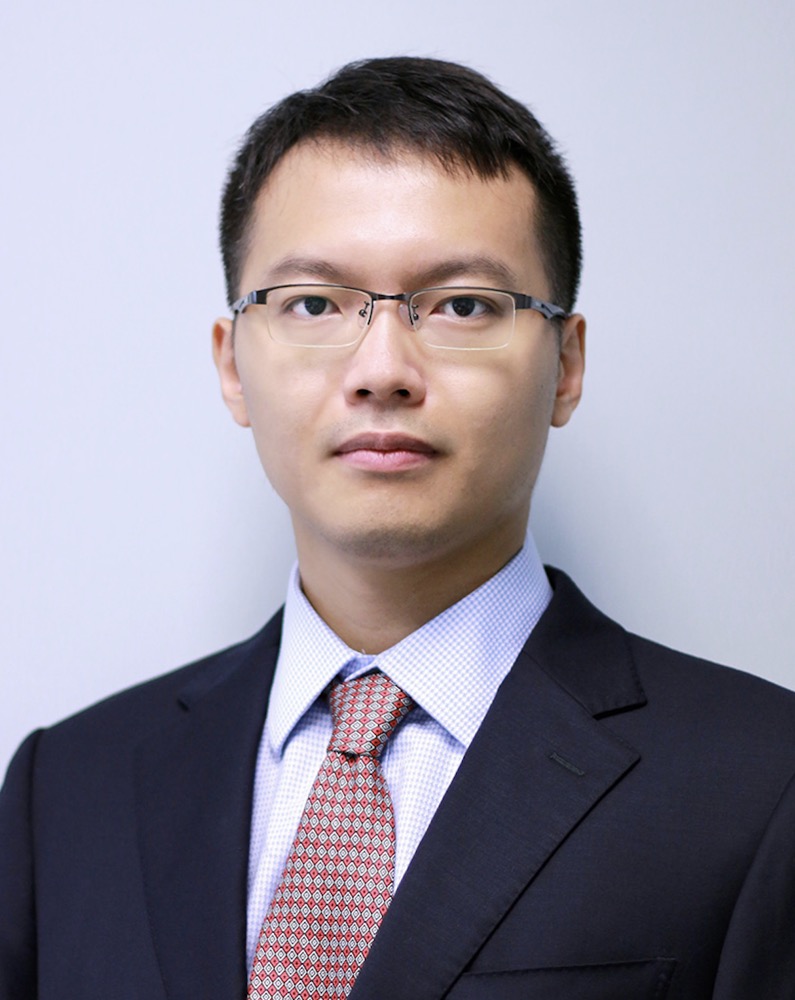
Zhenyu Yan
Prof. Zhenyu Yan
CUHK · AIoT Lab
Hongkai Chen
Prof. Hongkai Chen
CUHK · AIoT Lab
Siyang Jiang
Siyang Jiang
CUHK · AIoT Lab
Competition Committee
Guangyu Chen
Guangyu Chen
CUHK · AIoT Lab
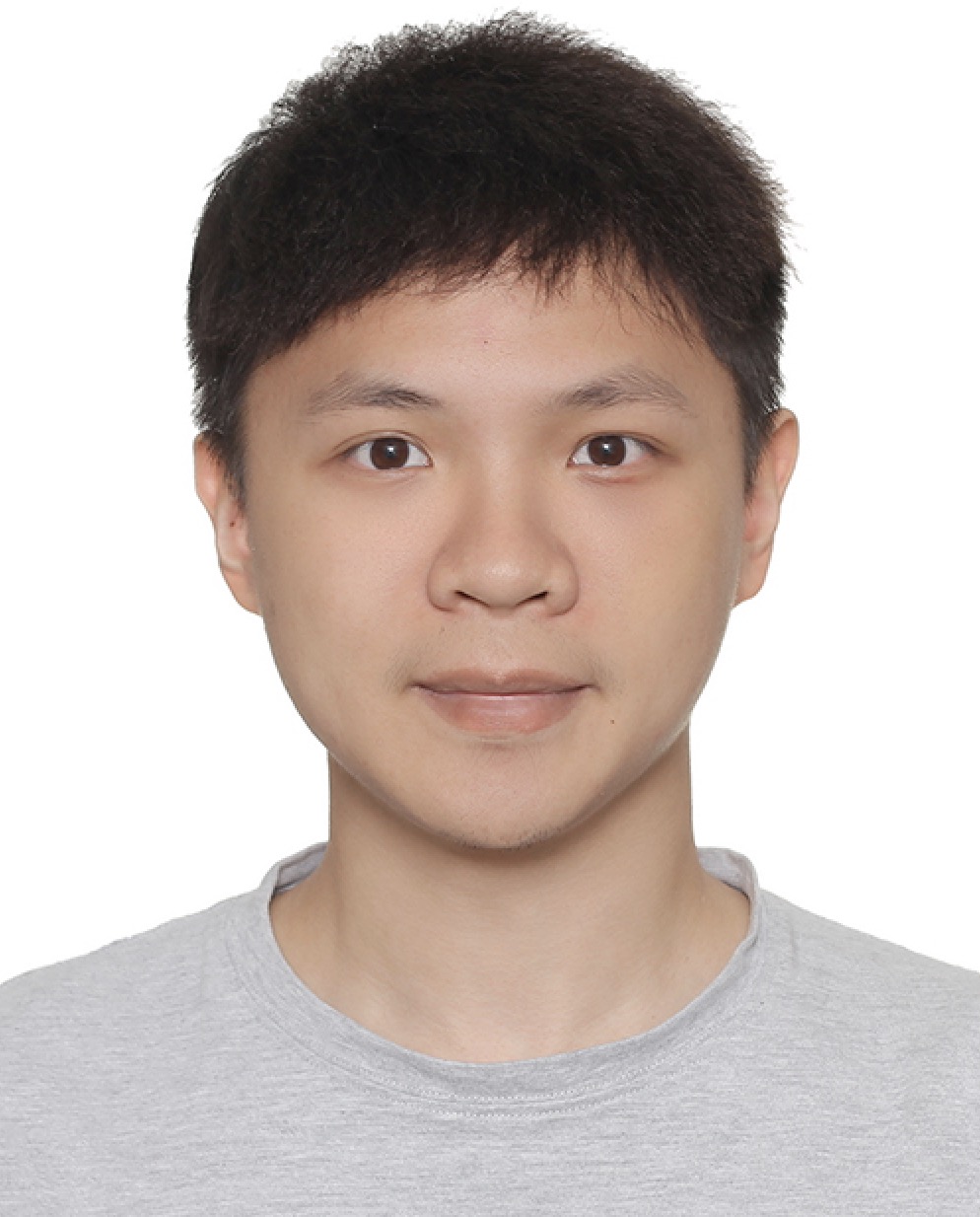
Liekang Zeng
Liekang Zeng
CUHK · AIoT Lab
Anlan Peng
Anlan Peng
CUHK · AIoT Lab
Mu Yuan
Mu Yuan
CUHK · AIoT Lab
Bufang Yang
Bufang Yang
CUHK · AIoT Lab
Xiang Ji
Xiang Ji
CUHK · AIoT Lab
Steering Committee
Guoliang Xing
Prof. Guoliang Xing
CUHK · AIoT Lab

Contact

For technical questions or general information about the competition and dataset.

General Inquiries

Technical questions, team registration help, or anything else about the challenge.

Affiliation

The Chinese University of Hong Kong
AIoT Lab · Dept. of Information Engineering